
 Philip's Piano Academy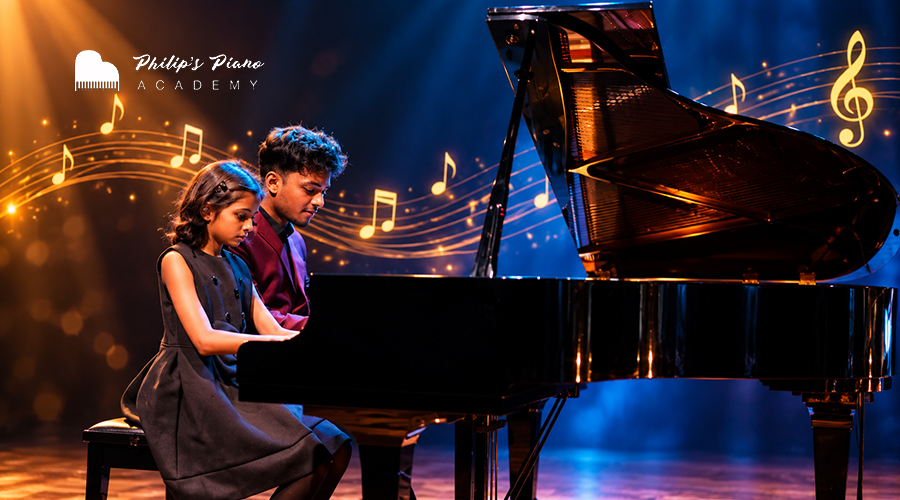
A child’s first music lessons can introduce much more than a collection of songs. Learning piano gives children opportunities to listen carefully, follow rhythms, explore sounds and gradually coordinate both hands. With guidance and suitable activities, these early experiences can become an enjoyable introduction to music.
At Philips Piano Academy, owned by Ajith Philip, piano lessons for kids follow his distinctive teaching method. Teachers use this structured system in one-on-one lessons adapted to each child’s readiness, pace and interests.
Begin with Readiness and Curiosity
Children develop at different rates, so readiness matters alongside age. The academy generally recommends starting from four years old. Its website notes that some children may be ready at three and a half, following an assessment of their focus and parental support.
For preschool learners, the program uses games, stories and movement to introduce rhythm, ear training and finger coordination. These activities give young children ways to engage with music before demanding pieces become appropriate.
School-age children and teens can follow a structured program that develops reading, technique and musical expression.
Give Each Child Individual Attention
When choosing piano classes for kids, consider how much personal guidance your child will receive. Individual lessons allow teachers to observe difficulties, adjust explanations and select manageable next steps.
Philips Piano Academy’s sessions are strictly one-on-one. A child who needs more time with a rhythm can revisit it, while another who is ready can move forward. This approach allows learning to respond to the individual rather than requiring everyone to follow the same pace.
Personalised feedback also gives families a clearer idea of what to practise between lessons.
Ajith Philip’s Structured Teaching Method
Basic piano lessons for kids can introduce recognising notes, keeping a steady beat, using suitable hand positions and playing simple phrases. As children gain familiarity, they can work towards coordinating both hands and reading more confidently.
Every teacher at Philips Piano Academy is fully trained directly under Ajith Philip and strictly follows his proven teaching method. Teachers implement the system he developed without deviations or changes to its framework. This gives children a consistent learning structure, while the pace, explanations and support suit their readiness. His internationally aligned approach connects notation, technique and expression, helping families understand how each lesson contributes to the child’s musical development.
Make Sight Reading a Central Skill
Sight-reading is a main focus of Ajith Philip’s system. Children learn to recognise notes and rhythms and gradually connect written music with coordinated playing. Reading gives them a way to approach new pieces without depending entirely on copying a demonstration or remembering finger movements. As notation becomes more familiar, they can progress through lessons with greater independence. Teachers build these skills step by step, supporting the transition towards intermediate and advanced levels as the child becomes ready. Regular practice and parental encouragement help reinforce this foundation.
A useful practice goal might be a short passage or one rhythm. Completing manageable tasks can help children recognise their progress.
Make Practice a Family Routine
Home practice connects one lesson to the next. Short, regular sessions give children opportunities to revisit what their teacher introduced without making every practice session feel overwhelming.
Parents can help by setting aside a consistent time, keeping materials ready and encouraging effort. Ask the teacher which tasks deserve attention and how to support your child without taking over.
For children under six, the academy states that a parent must be present during lessons. This helps families understand the teaching and support practice afterwards.
Explore Learning From Home
Online piano lessons for kids can make regular learning easier for families managing school and travel commitments. The academy offers online lessons and describes hybrid learning options.
Its online setup guidance lists a smartphone, a piano or keyboard and a tripod. Positioning the device so the teacher can observe the child’s hands and keyboard helps support instruction. Discuss your child’s age, attention and home setup with the academy when deciding on a format.
Find Motivation on the Winter Recital Stage
The academy’s Grand Winter Recital gives children an opportunity to perform on a large stage before a substantial audience, in a proper concert setup. Working towards this event can make practice more purposeful and give families a chance to celebrate their child’s musical growth. Teachers following Ajith Philip’s system help students prepare suitable pieces and practise presenting them confidently. The academy also supports ABRSM or Trinity examination preparation. Performances and exams remain optional, so families can choose goals suited to their child.
Explore Piano Lessons for Kids and Teens to discuss an appropriate starting point. Ajith Philip’s structured approach, with guidance and family encouragement, helps children build foundations at their own pace.